Putin Observes Large-Scale Russian Military Exercises Testing New Weapons and Combat Tactics
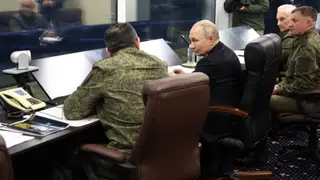
President Putin attended the main phase of Russia's Center-2026 strategic exercise at the Chebarkulsky training ground on October 2, where over 47,000 Russian and allied troops tested new weapons systems and combat scenarios informed by operational experience in Ukraine. The exercise involving 11 training grounds and the Caspian Sea includes approximately 2,000 weapons systems, 90 aircraft, and 77 naval vessels, with military contingents from seven countries participating and observers from 51 nations. The drills focus on improving command and control capabilities during response to external aggression while integrating lessons learned from the ongoing conflict.
The Center-2026 exercise represents one of Russia's largest military drills, mobilizing forces across multiple regions and involving significant international participation. The operation tested coordination among Russian military branches—including ground forces, air power, and naval capabilities—alongside contingents from allied nations. Notably, the drills incorporated lessons from Russia's ongoing operations in Ukraine, with emphasis placed on command structure effectiveness and the practical deployment of newly developed weapons platforms.
The exercise showcased recent weapons development, particularly the Geran-series attack drones, which represent advances in Russia's unmanned strike capabilities. These systems demonstrated extended operational ranges and payload capacities during the demonstrations. The event's scale—spanning 11 training grounds and involving forces from seven nations plus observers from 51 countries—underscores the significance Russia places on demonstrating military readiness and interoperability with allied forces.
The exercise may signal Russia's efforts to strengthen military coordination with allied nations and assess operational improvements based on Ukraine experience. International observers' participation could serve dual purposes: demonstrating Russia's military capabilities to foreign powers while potentially gathering intelligence feedback. The exercise's timing and scale might influence regional security assessments among NATO countries and neighboring states, potentially affecting diplomatic calculations and military planning in Eastern Europe and Central Asia.