Veterans and Lawmakers Rally Against Planned Trump Monument Near Arlington Cemetery
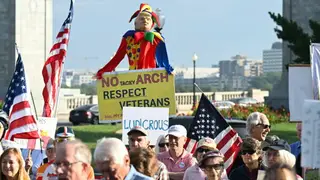
Dozens of activists, including military veterans and Democratic lawmakers, gathered at Memorial Circle in Washington to protest a proposed 250-foot arch President Trump plans to construct near Arlington National Cemetery. Opponents criticized the monument's scale, cost, lack of Congressional approval, and potential impact on the sacred cemetery grounds, arguing that resources would be better spent improving veteran services. Protesters are pursuing legal action through a pending lawsuit and hoping midterm election results will shift political momentum against the project.
The proposed monument would rise from Memorial Circle, a traffic junction connecting the National Mall to Arlington National Cemetery. The structure is designed with an observation deck and, according to recent announcements, will incorporate military infrastructure including drone systems and sniper positions. The placement raises concerns about its proximity to one of the nation's busiest airport approach corridors, where planes pass overhead at regular intervals.
Opposition to the project crosses party lines, with critics arguing that the $250 million could be redirected toward direct veteran services and healthcare. The absence of Congressional approval and input from veterans' organizations and Gold Star families has become a central grievance. Legal challenges are already underway, with the outcome potentially dependent on upcoming midterm elections and Supreme Court decisions regarding executive authority over federal lands.
The dispute reflects broader tensions over presidential power, memorial appropriateness, and federal spending priorities. Veterans and their advocates may gain political leverage if midterm results shift congressional composition. Arlington National Cemetery's sanctity could become a rallying point for both supporters and opponents during upcoming electoral cycles. The outcome may establish precedent for future executive decisions regarding monuments on federally protected sites and resource allocation between infrastructure projects and veteran services.