Miniaturized Gallium Nitride Semiconductor Delivers Substantial Performance and Efficiency Improvements
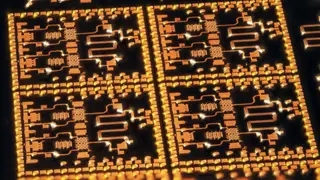
Northrop Grumman has introduced a compact gallium nitride chip designed to meet demanding radio-frequency applications with significantly enhanced capabilities. The device delivers triple the power output and twenty times better signal quality compared to previous generations while maintaining a rice-grain form factor. Its dual-function design addresses the need for more efficient and capable components in communications and defense systems.
Gallium nitride represents an important materials class for high-frequency electronics, enabling components to operate at power levels and speeds that silicon-based alternatives struggle to match. Northrop Grumman's advancement in miniaturizing this technology while simultaneously boosting performance metrics addresses a persistent engineering challenge: reducing device footprint without sacrificing capability. The rice-grain scale achieved here suggests meaningful progress in thermal management and circuit density for the semiconductor field.
The dual-function architecture of this chip indicates an effort to consolidate previously separate components into a single integrated solution. Such consolidation typically reduces system complexity, board space requirements, and potential failure points in end-use applications. These improvements may have cascading benefits for system designers seeking to enhance efficiency in power-constrained or space-limited environments.
Enhanced gallium nitride semiconductors could influence communications infrastructure and defense electronics by enabling more compact, efficient systems. Telecommunications networks, satellite systems, and radar applications may benefit from reduced power consumption and smaller physical footprints. The efficiency gains could also affect data center operations and renewable energy conversion systems. However, real-world impact depends on manufacturing scalability, cost factors, and integration into existing technological ecosystems—variables not addressed in available information.