Armenian Leader Faces Domestic Backlash Over Peace Initiatives With Azerbaijan
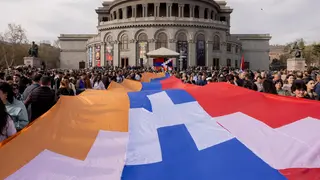
Armenian Prime Minister Nikol Pashinyan's government is increasingly targeting supporters of the Karabakh independence movement, demonstrating tensions between pursuing regional peace and addressing domestic political demands. Following Azerbaijan's 2023 military operation that seized the previously self-declared Nagorno-Karabakh Republic and displaced thousands of ethnic Armenians, Pashinyan has begun dismantling institutional remnants of the former state and restricting advocacy for the lost territory. This crackdown reflects the difficult choices facing Armenian leadership as it navigates between reconciliation efforts and nationalist sentiment within its own population.
Armenia's government has dismantled institutional structures left behind by the former Nagorno-Karabakh Republic, including shuttering its Yerevan diplomatic mission that once maintained a substantial bureaucracy. The 2023 Azerbaijani military operation that captured the region displaced thousands of ethnic Armenian residents, many of whom have resettled within Armenia proper. Prime Minister Pashinyan has framed acceptance of this territorial loss as necessary for long-term stability after three decades of armed conflict that claimed tens of thousands of lives.
The political divide over this approach has created internal friction, with some segments viewing territorial concessions as pragmatic peacebuilding while others characterize the policy as abandonment of a historic Armenian cause. Karabakh refugees have faced documented online harassment and rhetoric portraying them as ungrateful or disloyal, amplified through pro-government media channels and public statements by official figures.
This situation may strain Armenian social cohesion and democratic norms during a critical transition period. Refugee populations could face ongoing marginalization if government pressure continues, potentially destabilizing communities already traumatized by displacement. The tension between pursuing regional peace and protecting vulnerable populations raises questions about how post-conflict societies balance reconciliation with accountability to displaced citizens, affecting broader patterns in international conflict resolution.