Runway AI Releases Video-Trained Robot Control Model to Address Data Scarcity Problem
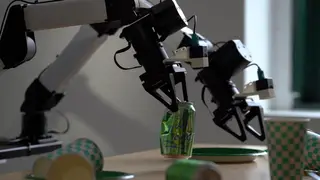
Runway AI unveiled Praxis-1, an open-weight model that converts video data into robot control policies, tackling the shortage of expensive real-world robotics training data. By leveraging large-scale video pretraining, the model understands object behavior and task progression without requiring extensive robot demonstrations. The company plans to release Praxis-1 publicly in the coming months after testing with early partners.
Runway AI's approach addresses a fundamental challenge in robotics development: the scarcity and high costs associated with gathering real-world training data through robot demonstrations. By repurposing video footage—a vastly more abundant resource—the company has created a model that learns object behavior and task progression without requiring extensive hands-on robotic practice. The model achieves this by building on Runway's existing video pretraining infrastructure, which already encodes understanding of physics and motion.
The company has validated its methodology through correlation testing, finding that simulations within its world model align with real-world outcomes at a 0.95 correlation rate. Early testing with robotics partners demonstrates the model's flexibility across different robot types, from multi-armed systems to humanoid forms, requiring only minor adjustments for different hardware configurations.
Praxis-1 could significantly lower barriers to robotics development by reducing dependence on expensive real-world data collection, potentially accelerating adoption across manufacturing and other sectors. The model's generalist design may enable smaller companies and research teams to develop robotic applications without massive data-gathering investments. However, the technology's real-world effectiveness and safety considerations remain to be proven at scale. Public availability could reshape the robotics industry's competitive landscape, though questions remain about performance on novel tasks and long-term reliability in unpredictable environments.