Multi-Agency Rope Rescue Training Program Expands in Southern Berkshire County
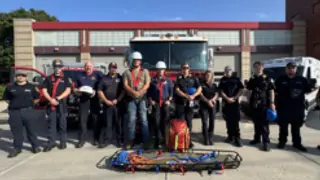
Emergency responders from Southern Berkshire Ambulance and fire departments in Great Barrington, Monterey, and Egremont have established a coordinated rope rescue training program to handle technical rescues in the region's challenging terrain. The cross-trained team, which includes EMS-certified personnel integrated into rigging operations, conducted its second training session in summer 2026 and can respond to incidents such as hikers stranded on embankments and high-altitude evacuations. The collaborative approach ensures rapid response with standardized procedures when emergency calls require specialized rescue skills in mountainous areas.
The four participating agencies—Southern Berkshire Ambulance, Great Barrington Fire, Monterey Fire, and Egremont Fire—identified a critical gap in emergency response capabilities for their shared mountainous jurisdiction. The region's terrain, which includes major hiking destinations and water features, frequently generates rescue situations requiring specialized technical skills that individual departments lack the personnel to manage independently. By conducting intensive multi-day training sessions and committing to ongoing monthly practice, the collaborative team has developed standardized protocols and equipment that enable any responding unit to operate seamlessly with others.
The integration of EMS-certified personnel into rope rescue operations represents a significant operational innovation. Traditionally, medical personnel remain staged at lower elevations while technical teams manage patient extraction, creating delays in care delivery. Cross-training fire personnel in both medical and rigging competencies allows medical intervention to begin earlier during mountain rescues, potentially improving patient outcomes in time-sensitive situations.
This coordinated approach to emergency workforce development may influence how resource-constrained rural and mountainous regions structure rescue services across jurisdictional boundaries. The model demonstrates how shared training investment and standardized procedures can expand capabilities without requiring any single agency to independently fund specialized infrastructure. Communities facing similar terrain-related rescue demands could potentially adopt comparable inter-agency frameworks, though implementation would depend on local staffing levels, funding availability, and regional geography.