Most G20 Nations Oppose US Trade Position on Industrial Overcapacity
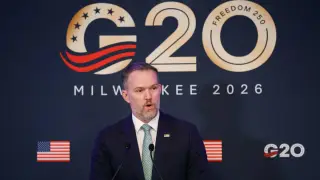
A majority of Group of 20 countries rejected American-led proposals to address excess industrial capacity and non-market economic policies at a trade ministers' meeting in Milwaukee. China, a key focus of the US tariff investigation into sectors with overcapacity, had previously objected to similar statements at finance leaders' meetings. The disagreement underscores divisions within the G20 over trade and economic cooperation, though members did reach consensus on condemning the weaponization of food trade.
The Milwaukee trade meeting represents the Trump administration's effort to build multilateral consensus on industrial policy concerns, particularly targeting subsidized production that floods global markets. However, the minimal support—only Mexico and Argentina backing the forced labor initiative—demonstrates the difficulty of coordinating trade positions among nations with competing economic interests. China's consistent objections to these measures reflect Beijing's defense of its state-directed economic model against what it characterizes as protectionist framing by Western powers.
The US simultaneously pursues multiple tariff investigations and reserve-release negotiations, suggesting a broader strategy to reshape trade frameworks. The one area of agreement—opposing food trade weaponization—emerged as a rare consensus point, though this reflects concerns about supply chain coercion rather than addressing the core industrial capacity disputes dividing the group.
These divisions within the G20 could complicate efforts to establish predictable international trade rules, potentially leading individual nations to pursue bilateral arrangements rather than multilateral agreements. Businesses dependent on cross-border supply chains and tariff predictability may face increased uncertainty. Developing and emerging economies might experience pressure to choose alignment with either US-led or alternative trade frameworks, while consumers could see price impacts if tariff disputes escalate or resolution becomes protracted.