Loewe stages fashion show in circular architectural arena at historic Paris palace
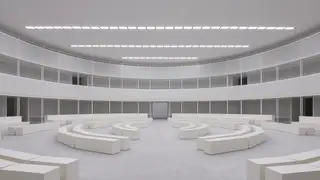
Designers Jack McCollough and Lazaro Hernandez will present their latest collection at Paris Fashion Week within a striking circular arena designed by Casper Mueller Kneer, marking the architecture firm's first major project for the house. Located inside a white box constructed on the grounds of the medieval Château de Vincennes, the double-height showspace features a scaffold-like construction with an upper gallery and cuboid seating arranged around a central stage. The minimal all-white design creates a theatrical hybrid space that combines elements of an arena, theatre, and gallery for an immersive presentation.
Loewe's creative directors have established a consistent approach to their runway presentations since joining the house, favouring understated architectural frameworks that allow artworks and design elements to command attention. Previous collections have incorporated significant contemporary and historical artworks, positioning fashion within a broader cultural conversation. This new venue represents an evolution in scope, enlisting specialist architects to construct an entirely custom exhibition structure rather than adapting existing gallery spaces.
The circular configuration serves a practical function beyond aesthetics—by arranging seating concentrically around a central stage with two viewing levels, the designers maximise audience capacity while maintaining close sightlines to garments and details. Historical theatrical models including the Padua Anatomical Theatre and London's Globe Theatre influenced the spatial arrangement, emphasising performance and collective experience as central to how the collection is communicated.
This presentation approach may influence how luxury brands conceptualise fashion shows, potentially shifting focus from passive runway observation toward immersive, three-dimensional viewing experiences. The investment in custom architecture could set expectations for fashion week productions, though such intensive staging remains accessible primarily to houses with substantial resources. The trend could affect urban planning around fashion events, as brands seek distinctive venues, while it may also reshape how attendees engage with luxury collections through proximity and spatial design rather than traditional linear presentation formats.