Spanish-Equatoguinean Ceramicist Bisila Noha Wins Inaugural Tacchini Prize
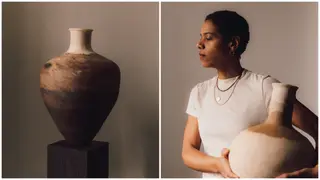
Bisila Noha, a Spanish-Equatoguinean artist based in London, has been awarded the inaugural Tacchini Prize, recognizing her expressive ceramic practice that blends artistic research with design culture. Her work, which draws from deep historical and cultural investigation, will be featured in an exhibition at Casa Tacchini in Milan through November 2026, alongside pieces by the Italian furniture brand. Since transitioning from advertising to ceramics in 2016, Noha's sculptures have entered prominent museum collections including the V&A Museum and are being presented at major venues such as the Venice Biennale.
Noha's artistic methodology centers on extensive travel and cultural immersion rather than studio-based experimentation alone. She has deliberately sought apprenticeship opportunities in West African pottery traditions, particularly in Nigeria and Senegal, to deepen her technical knowledge and understand ceramics as a living cultural practice across generations. This research-driven approach distinguishes her work from purely aesthetic ceramic production.
The artist's practice frequently examines overlooked narratives within craft history, particularly the contributions of women potters who have been historically marginalized or uncredited. Projects like "Searching for Kouame Kakahá" represent deliberate efforts to document and honor individual artisans whose influence shaped contemporary practice but remained largely invisible in institutional records.
This prize recognition may elevate ceramics within contemporary design discourse by positioning it as serious artistic research rather than decorative craft. The partnership between a major furniture brand and a nonprofit focused on ceramics could potentially increase institutional support and commercial viability for ceramic artists globally. Additionally, Noha's visibility as a woman of color working in this field may encourage broader conversations about representation and authorship in design history, particularly regarding non-Western and female practitioners whose contributions have been systematically overlooked.