Bacterial Corn Disease Spreads Late in Season, Requires Multi-Year Management Strategy
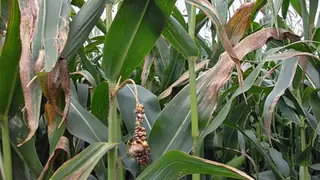
Goss's wilt, a bacterial disease caused by Clavibacter nebraskensis, is appearing in Illinois cornfields this fall and can spread rapidly through crops, though late timing may limit yield impact in some cases. The disease survives in corn residue and poses challenges for farmers using conservation tillage practices, as it cannot be controlled with standard fungicides. Documenting affected fields and implementing proper residue management will be critical for farmers planning their corn rotations in 2027 and 2028.
Goss's wilt, caused by a bacterial pathogen rather than a fungus, cannot be managed through conventional fungicide applications that typically address most corn diseases. The infection persists in crop debris left on fields, creating a multi-season management challenge particularly for farmers employing reduced-tillage systems designed to minimize soil disturbance and erosion. Fields affected this season may require careful monitoring and intervention strategies extending two or more years into the future.
The disease's late-season emergence this fall may spare some mature crops from severe losses, but vulnerability depends heavily on planting dates and corn maturity. Agronomists recommend farmers document affected areas now to inform future hybrid selection and rotation planning, as resistant varieties and non-host crop rotations represent the most practical long-term controls available to growers.
Goss's wilt could impact corn productivity across regions practicing conservation tillage, potentially affecting both individual farm economics and broader grain supply considerations. Farmers may face increased management complexity and input costs through hybrid selection and potential crop rotation adjustments. The disease's emergence highlights how climate conditions and agricultural practices interact to shape pest dynamics, with implications for agricultural sustainability strategies and food supply resilience in affected areas.