France agrees to release defence documents in decades-long investigation of 1980 plane crash
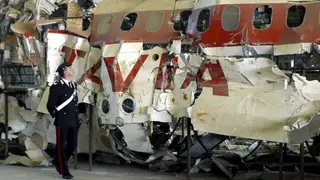
France's commitment to share classified defence documents with Italian authorities has revived hopes of clarifying the 1980 crash of Itavia Flight 870 near the island of Ustica, which killed 81 people and has remained shrouded in mystery for over four decades. The widely accepted theory holds that the DC-9 was accidentally shot down during an aerial confrontation, with a former Italian president suggesting a French fighter jet was responsible. Italian prosecutors abandoned plans to shelve the investigation following France's disclosure, offering a potential lifeline to victims' families who have campaigned for decades to uncover the truth.
The Itavia Flight 870 disaster occurred on June 27, 1980, when a DC-9 aircraft carrying 81 Italian passengers and crew members disintegrated over waters near Ustica in the Tyrrhenian Sea. Initial investigations attributed the tragedy to mechanical failure, a conclusion that conveniently benefited authorities seeking to avoid scrutiny while simultaneously destroying the airline operating the flight. Decades of subsequent inquiries revealed systematic destruction of evidence, with radar data deliberately erased from multiple Italian military installations, severely constraining investigators' ability to establish facts.
A former Italian president publicly suggested that a French fighter jet inadvertently struck the aircraft during an undisclosed aerial engagement, a claim that prompted accusations of deliberate concealment by Western allied nations. Multiple Italian air force generals faced criminal charges related to evidence destruction and breach of duty, though full accountability remained elusive throughout the investigation's lengthy history.
France's decision to release classified defence documents may provide Italian prosecutors with technical evidence previously unavailable to establish what occurred during the crash. Victims' families and Italian society broadly could benefit from transparency that might finally resolve longstanding questions about institutional accountability and potential international coordination in covering up the incident. However, skeptics caution that even with new documentation, definitive conclusions may remain unattainable, potentially leaving unresolved the broader questions about governmental responsibility that have contributed to public mistrust in Italian institutions.