New Delhi Marks Gandhi Jayanti With Sanitation Infrastructure Improvements
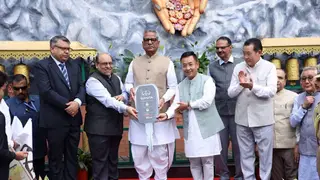
Chief Minister Prem Singh Tamang and Governor Om Prakash Mathur led the 157th Gandhi Jayanti celebration at Mahatma Gandhi Marg, emphasizing waste management and community involvement while distributing advanced sanitation equipment to the Urban Development Department. The event included recognition awards for gram panchayats, municipalities, and institutions demonstrating excellence in cleanliness and waste management, along with the launch of digital tools like the Safaa Gangtok App to improve access to waste management services. A Toyota CSR program also handed over 12 pieces of advanced sewage and waste collection equipment to support the elimination of manual scavenging.
State officials marked the 157th anniversary of Mahatma Gandhi's birth by prioritizing infrastructure upgrades for sanitation systems. The government distributed mechanized collection and treatment equipment through a corporate partnership, aiming to reduce reliance on manual labor in waste handling—a practice that has historically affected vulnerable workers. Recognition awards were given to local administrative bodies and community organizations that demonstrated measurable progress in cleanliness standards.
A newly launched mobile application was introduced to streamline citizen access to waste disposal services, alongside a comprehensive report documenting the municipality's waste reduction strategies. These digital and physical infrastructure additions represent an effort to integrate technology with traditional governance structures for environmental management at the local level.
These sanitation improvements could affect urban residents through more efficient waste collection and reduced environmental contamination in populated areas. Communities awarded for cleanliness may experience reinforced local commitment to maintenance standards. The mechanization initiatives may impact workers in manual sanitation roles, potentially requiring workforce transition or retraining. Digital service tools could increase citizen participation in waste management while creating accountability mechanisms. The broader implication suggests that aligning infrastructure investment with civic recognition programs may help build sustained public engagement in environmental practices.