Western Powers Must Escalate Military Support to Counter Russian Winter Offensive
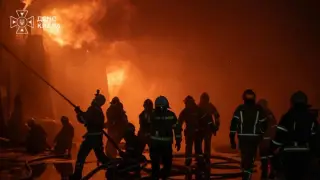
An analysis argues that Russia is intensifying attacks on Ukrainian infrastructure including power grids and bridges as winter approaches, and Western nations must respond with concrete military measures rather than symbolic gestures. The piece calls on the United States to lift restrictions on long-range missile strikes and fund Ukrainian weapons production, while European allies should provide air defense systems, fund anti-drone operations, protect energy infrastructure, and utilize frozen Russian assets for reconstruction. The author emphasizes that infrastructure destruction is part of Russia's strategy to destabilize civilian populations through winter hardship.
Russia has intensified its targeting of Ukrainian civilian infrastructure as colder months approach, directing attacks at power generation facilities and critical transportation routes including bridges. This strategy appears designed to create humanitarian hardship by disrupting heating, electricity, and supply chains during winter months when civilian populations face particular vulnerability. The article frames this as a deliberate campaign to destabilize major population centers rather than purely military targets.
The proposed Western response involves both defensive and offensive measures. Defensive approaches include transferring air defense systems to intercept incoming attacks, while offensive measures would enable Ukrainian strikes on Russian military and energy infrastructure. Additional proposals include direct funding of Ukrainian weapons manufacturing and utilizing frozen Russian state assets as a financing mechanism for reconstruction and defense purchases.
This perspective could influence policy discussions among NATO members and U.S. lawmakers regarding military aid limitations and strategy. The recommendations may affect decisions about resource allocation, with potential consequences for Ukrainian civilian protection during winter, the scale of military support from Western nations, and diplomatic negotiations. The analysis targets policymakers rather than general audiences, potentially shaping defense committee deliberations and allied coordination on Ukraine support levels.