Huawei's Second-Generation Tri-Fold Phone Balances Innovation With Practical Daily Use
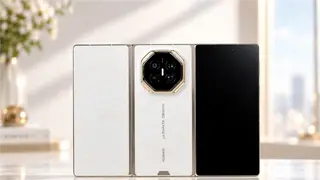
Huawei's Mate XT 2 advances tri-fold smartphone technology with an inward-folding design that operates as a compact 6.5-inch device when closed and expands to 10.2 inches when fully opened for multitasking and media consumption. The device is powered by Huawei's Kirin 9050 Pro processor running HarmonyOS 7.0, which manages the phone's different screen configurations as users switch between folded and unfolded modes. Despite improvements in durability, structural stability, and water/dust resistance through updated hinges and reinforced materials, the phone's weight of approximately 299 grams and added thickness present ongoing challenges for one-handed everyday use.
The Mate XT 2 addresses a fundamental question that manufacturers of foldable devices must answer: whether expanding screen real estate justifies the compromises in portability and handling. At nearly 300 grams with added thickness, the device demands users accept trade-offs in everyday convenience to gain workspace during specific tasks like productivity work, gaming, or media viewing.
The engineering refinements demonstrate Huawei's iterative approach. Enhanced hinge mechanisms, reinforced materials, and improved dust-water resistance ratings signal maturation beyond the first generation, while software optimization through HarmonyOS 7.0 allows seamless transitions across multiple screen states. However, these improvements largely address durability rather than the fundamental usability question of whether consumers genuinely need three distinct display configurations in their daily routines.
Tri-fold phones could influence purchasing decisions among professionals and content creators who prioritize expandable workspace, potentially reshaping expectations around mobile multitasking. However, the technology's premium pricing and weight penalties may limit mainstream adoption, leaving the category niche compared to conventional and single-fold devices. Success may depend on whether software developers create applications that meaningfully exploit tri-fold capabilities, rather than simply scaling existing designs across multiple screen sizes.