Kyiv endures around-the-clock Russian drone attacks as war intensifies in capital
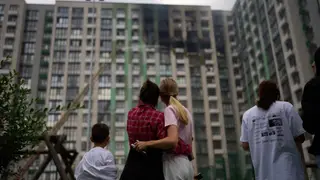
Russian forces have shifted their campaign against Kyiv to include daytime assaults with jet-powered attack drones beginning in late August, fundamentally altering how residents navigate their daily lives. The escalation has brought continuous air raid alerts, explosions, and casualties throughout workdays and commutes, with strikes hitting schools, residential buildings, scientific institutions, and energy infrastructure. Despite the mounting pressure and destruction, the city's population is working to maintain resilience amid what officials increasingly describe as front-line conditions.
Russia's tactical shift in its aerial campaign against Ukraine's capital began in late August, introducing sustained daytime strikes alongside nighttime bombardments. This represents a significant departure from earlier phases of the conflict when residents could anticipate attacks primarily after dark. The acceleration intensified dramatically in late September and early October, with a particularly severe week from September 25 through October 2 that resulted in at least 16 deaths and over 100 injuries across Kyiv and surrounding areas.
The attacks have targeted critical infrastructure alongside civilian areas, including energy facilities, educational institutions, scientific research centers, and transportation networks. The cumulative damage and air pollution from burning buildings have created hazardous living conditions, with authorities implementing emergency power cutoffs and urging residents to limit exposure to toxic smoke accumulating over the city.
The escalation of daytime attacks may significantly disrupt essential urban functions—healthcare, education, commerce, and transportation systems that depend on predictable operational windows. Residents' mental and physical health could deteriorate under continuous threat cycles, potentially affecting workforce productivity and social cohesion. The targeting of energy infrastructure ahead of winter months may create compounding humanitarian challenges. These pressures could test institutional capacity to maintain services and population resilience in prolonged urban conflict conditions.