Israeli Passengers Hesitate to Board Replacement Flight After Dramatic Emergency Landing in Saudi Arabia
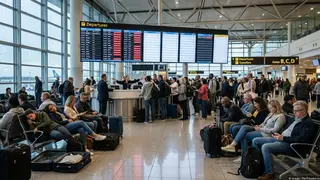
A Flydubai aircraft carrying roughly 170 to 180 passengers declared an emergency on September 30 and diverted to Tabuk in northern Saudi Arabia following a violent cockpit confrontation that injured the captain and resulted in sharp altitude loss. After safely landing, some Israeli passengers initially refused to board a replacement aircraft sent by the same airline, reflecting concerns about trust and the geopolitical complexities of Israeli-Gulf air travel. The unscheduled arrival highlighted the sensitivities surrounding overflight and emergency access protocols for Israeli-linked traffic using Gulf carriers.
The September 30 incident involved a violent altercation in the cockpit of a Boeing 737 operating between Dubai and Tel Aviv. During the confrontation, the captain sustained injuries while the co-pilot was subdued by crew members and additional pilots who were traveling as passengers. The aircraft experienced a pronounced altitude drop before stabilizing and diverting to Tabuk Airport in northern Saudi Arabia, where approximately 170–180 passengers—predominantly Israeli nationals—disembarked safely.
The emergency landing presented a delicate diplomatic situation, as Saudi Arabia has no formal ties with Israel and the unscheduled arrival of an Israeli-bound commercial flight raised questions about overflight permissions and emergency landing protocols. Following the landing, airline officials confirmed all passengers were accounted for, though some sustained injuries related to the in-flight struggle. The subsequent deployment of a replacement aircraft prompted uncertainty among some travelers about whether to reboard with the same carrier or await alternative arrangements.
This incident may influence passenger confidence in safety protocols aboard Gulf-based carriers serving Israeli routes, potentially affecting booking decisions and airline operations in the region. Airlines operating in geopolitically sensitive airspace could face increased scrutiny regarding crew vetting, cockpit security measures, and emergency response procedures. The hesitation of some passengers to quickly reboard suggests that high-stress aviation incidents may have lingering psychological effects that extend beyond immediate safety concerns, particularly when combined with the already heightened anxiety surrounding travel in contested airspace and between territories with tense relations.