Volcanic Ash Forces Flight Suspensions, Leaving Over 1,000 Passengers Stranded in Jakarta
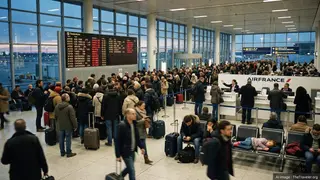
An eruption of Indonesia's Anak Krakatau volcano prompted flight suspensions and heavy curtailment at Jakarta's Soekarno-Hatta International Airport, one of Southeast Asia's largest aviation hubs, affecting connections to major regional gateways including Singapore, Kuala Lumpur, and Bangkok. More than 1,000 transit passengers found themselves stuck at the airport as their onward flights were canceled or rerouted, leaving many facing unexpected overnight stays with minimal information about service resumption. The disruption cascaded throughout Southeast Asia's short-haul network, hitting travelers using Jakarta as a transfer point particularly hard.
Jakarta's airport ranks among Southeast Asia's busiest transfer hubs, making it a critical chokepoint in the region's aviation network. When volcanic ash from Anak Krakatau forced operational shutdowns, the impact rippled far beyond Indonesia's borders, affecting routes to Singapore, Malaysia, and Thailand. Airlines operating through the airport quickly made the safety decision to suspend or curtail services, leaving aircraft grounded and schedules disrupted across multiple carriers and destinations simultaneously.
The disruption exposed particular vulnerabilities faced by connecting passengers. Those travelling on through-tickets discovered their legal protections and compensation eligibility varied widely depending on airline policies and ticket conditions. As alternative routes filled quickly and fares spiked on remaining seats, many stranded travellers found rebooking options limited, leaving them dependent on airline assistance for accommodation and meal provisions while awaiting service resumption.
The incident highlights how concentrated hub-and-spoke networks, while efficient for normal operations, can amplify disruption when a single major airport becomes temporarily unavailable. Connecting passengers—particularly those on budget carriers or complex itineraries—may face extended delays and financial uncertainty when volcanic or weather events force sudden suspensions. Airlines and airports may face pressure to improve crisis communication protocols and clearer passenger entitlement frameworks to better protect transit travellers during such disruptions.