Carbon Isotope Analysis Reveals Marine Plants in Dinosaur Diets
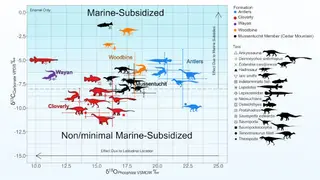
Analysis of tooth enamel from Cretaceous fossils reveals that coastal dinosaurs, crocodilians, turtles, and fish incorporated marine resources into their diets, as evidenced by elevated carbon-13 levels. The distinctive carbon signature of seaweed and other ocean plants appears in the dental remains of both aquatic and terrestrial predators from six North American Cretaceous formations, indicating marine plant material entered coastal food chains. This finding suggests that even large terrestrial herbivores likely supplemented their diets with seaweed and marine vegetation similar to how modern coastal animals do.
Researchers examined tooth enamel from creatures spanning six Cretaceous sites in North America, comparing coastal locations with an inland formation dating back 100 to 113 million years. The coastal specimens—from Canada, Idaho, Utah, Oklahoma, and Texas—consistently displayed higher concentrations of the heavier carbon isotope than their inland counterparts from Wyoming and Montana. This geographic pattern held true across multiple species categories, suggesting a shared food source rather than species-specific behavior.
The scientists concluded that marine macroalgae, or seaweed, was the most plausible explanation for the elevated carbon signatures. Because the signal appeared in both predators and herbivores, the marine plants must have entered food chains at a fundamental level. The persistence of this pattern across millions of years and multiple formations indicates seaweed supplementation was a stable, recurring dietary strategy for Cretaceous coastal animals.
This research may refine scientific understanding of prehistoric ecosystems and animal behavior, potentially influencing paleontology education and museum exhibits. The work could inform broader discussions about how terrestrial and marine systems interact—insights that might apply to modern coastal conservation efforts. By demonstrating ancient animals' reliance on marine resources, the study may encourage consideration of ecosystem connectivity in contemporary environmental management and climate adaptation planning.