Blue-Chip Index Falls as Treasury Yields Surge; Jobs Data Signals Fed Pause
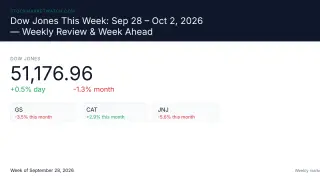
The Dow Jones Industrial Average declined 1.26% during the week of September 28 through October 2 as the 10-year Treasury yield climbed past 5.3%, marking a 19-year high that pressured rate-sensitive sectors including financials. September nonfarm payrolls came in significantly below expectations at just 29,000 jobs, prompting market participants to reduce their odds of an October Federal Reserve rate increase. Technology and industrial stocks provided support to the broader market, with semiconductor and equipment makers gaining ground amid artificial intelligence momentum.
The week's market movement reflected competing pressures between persistently elevated borrowing costs and emerging signs of labor-market softness. The 10-year Treasury yield's climb to levels unseen in nearly two decades weighed particularly on financial institutions and other sectors sensitive to interest rates, while companies in technology and industrial manufacturing managed gains driven by semiconductor strength and artificial intelligence developments.
The September employment figure—representing the lowest monthly job creation in some time—prompted investors to reassess the likelihood of continued Federal Reserve rate increases. This shift in expectations created a dynamic where weakness in traditional economic data paradoxically offered some market relief, as lower employment growth could justify a halt to monetary tightening that has pressured bond prices and stock valuations.
Market volatility of this nature could affect millions of households with retirement savings, mortgages, and investment portfolios. Rising Treasury yields may increase borrowing costs for consumers and businesses, potentially slowing economic growth, while weakening employment data may signal emerging job-market challenges. The Federal Reserve's next policy decision could meaningfully influence both inflation and employment trends, affecting wage growth, purchasing power, and lending conditions across the economy.