Acoustic Analysis and AI Reveal Sensory Design of Ancient Etruscan Burial Chambers
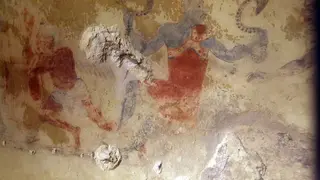
Researchers combined artificial intelligence with acoustic technology to study two 5th-century BC Etruscan tombs, revealing that these burial spaces were designed as immersive sensory experiences rather than simple repositories for the dead. The analysis demonstrates that ancient Etruscan architects deliberately embedded sound properties and visual elements into tomb construction, creating environments comparable to modern three-dimensional experiences. The findings highlight the sophisticated understanding pre-Roman societies possessed regarding how sound and design influence human perception and experience.
The Etruscan civilization of pre-Roman central Italy possessed a sophisticated grasp of how environmental design influences human consciousness. Evidence suggests this ancient society incorporated auditory and visual elements strategically throughout their burial architecture, transforming tombs into multi-sensory spaces. Lighting conditions—produced by flickering flames rather than modern illumination—combined with architectural acoustics and aromatic elements to create layered perceptual experiences for visitors. The research drew on two specific 5th-century burial sites, examining how their physical properties functioned as intentional design features rather than mere byproducts of construction.
These findings may reshape how scholars interpret ancient architectural intentions and cognitive sophistication in pre-classical societies. Museums and heritage sites could reconsider how they present archaeological spaces, potentially moving toward experiential reconstructions that honor original environmental contexts. The methodology combining AI with acoustic analysis may influence future archaeological investigations, encouraging researchers to examine sensory dimensions previously overlooked. Understanding how ancient cultures manipulated perception might also inform contemporary discussions about immersive design and human experience across various fields.