Aaron Sorkin Reveals Jesse Eisenberg Rejected 'The Social Reckoning' Despite Financial Incentives
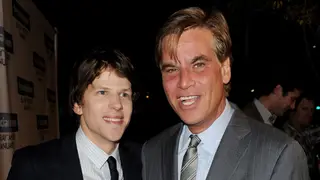
Screenwriter Aaron Sorkin detailed his unsuccessful efforts to convince Jesse Eisenberg to reprise his role as Mark Zuckerberg in the sequel 'The Social Reckoning', noting that financial incentives proved ineffective with the actor. Sorkin created a detailed outline of persuasive arguments and even suggested alternative uses for the increased compensation, but Eisenberg ultimately declined because he wanted to distance himself from the Zuckerberg character. Jeremy Strong has taken over the role for the new film, while Sorkin acknowledged that Eisenberg came closest to reconsidering during their third or fourth discussion about the project.
Aaron Sorkin made an unusually intensive push to bring Jesse Eisenberg back for the upcoming sequel, even preparing a detailed outline—something he typically reserves only for personal conversations rather than screenwriting. The filmmaker's efforts extended beyond simply offering enhanced compensation; he compiled creative proposals for how Eisenberg might utilize the additional funds, including funding theatrical productions. Despite these varied persuasion strategies, Eisenberg's resistance remained firm, rooted in his desire to move beyond an association that has defined much of his public perception.
The casting transition represents a significant shift in the franchise's trajectory. Jeremy Strong steps into the role of Zuckerberg for a project that appears to explore the tech executive's evolution in the years since the original 2010 film. Sorkin's account reveals the genuine difficulty in recasting iconic roles, particularly when original actors have developed complicated relationships with their most famous characters.
This casting change may influence audience reception of the sequel, as viewers accustomed to Eisenberg's portrayal face a new interpretation. The story could also resonate with industry professionals regarding actor autonomy and the limits of financial inducement in career decisions. Additionally, it illustrates how major creative figures like Sorkin approach negotiations with collaborators, potentially affecting discussions about director-actor relationships and the pressures surrounding high-profile franchise continuations.