New book celebrates over 60 female photographers who pushed creative and physical boundaries
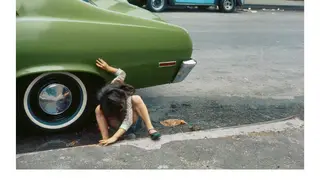
A new publication titled 'Women Photographers Are Dangerous' highlights the often-overlooked contributions of more than 60 women photographers throughout history, from war correspondents to scientific and advertising professionals. The book deliberately avoids romanticizing women's role in photography, instead grounding its narrative in rigorous historical and artistic research to bring both lesser-known and established figures to prominence. The work acknowledges women's significant technical innovations in developing photography as a medium, challenging the male-dominated narrative that has long defined the field's history.
The publication brings attention to a significant gap in art history by documenting the careers of female photographers spanning multiple disciplines and continents. From early pioneers like Anne Atkins to contemporary visual artists, the book traces how women have contributed across documentary journalism, scientific photography, portraiture, and commercial work. The research reveals that women played instrumental roles in developing photography's technical foundations before gradually being displaced as the medium gained prestige and commercial viability.
The book's approach emphasizes historical accuracy over sentimentality, acknowledging that women's participation in photography has always been complicated by systemic barriers rather than lack of talent or ambition. By examining both celebrated and obscure figures alongside their male contemporaries, the publication creates space for reassessing how photography's narrative has been constructed and whose contributions have been systematically undervalued.
This publication could influence how photography is taught and exhibited in educational and cultural institutions, potentially prompting reassessment of historical collections and curatorial practices. Museum professionals and art historians may find themselves prompted to research previously overlooked female practitioners in their archives. For emerging photographers, particularly women, the book may serve as both historical validation and practical inspiration. The broader impact could extend to how creative fields acknowledge historical inequities and actively work to correct the record—a pattern that might encourage similar projects across other disciplines where women's contributions have been marginalized.