Jensen Huang Dismisses AI Existential Risk Concerns While Nvidia Advances Safety Measures
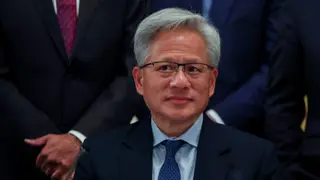
Nvidia CEO Jensen Huang has become a prominent critic of warnings about artificial intelligence posing existential threats to humanity, calling such narratives "irresponsible" and arguing that governments should focus on pragmatic harms rather than theoretical ones. Despite his public skepticism of doomsday scenarios, Huang maintains that AI safety is "paramount" and Nvidia rolled out a new Open Agent Safety Platform designed to prevent rogue AI agents from exceeding their authorized scope. His position aligns with the Trump administration's stance while allowing Nvidia to position itself as both growth-focused and safety-conscious in the rapidly evolving AI sector.
Jensen Huang's public skepticism about AI existential risks contrasts sharply with safety-focused peers like Sam Altman and Dario Amodei, whom he characterizes as promoting fear-based narratives. Huang advocates for regulatory frameworks addressing demonstrable harms rather than speculative scenarios, comparing AI development to automotive evolution where improvements naturally reduce risks over time. His alignment with the Trump administration's dismissal of AI doomsday concerns positions Nvidia favorably within the current political climate.
Nvidia's newly announced Open Agent Safety Platform targets practical security vulnerabilities that have already materialized across the AI industry. The two-part system uses isolated environments (OpenShell) combined with continuous monitoring (Sentry) to prevent unauthorized agent actions. The company claims this technology could have prevented documented breaches, including incidents at OpenAI, demonstrating that safety investments need not slow development velocity.
Huang's dual messaging—dismissing existential concerns while advancing safety infrastructure—may influence how policymakers and investors evaluate AI risk management priorities. This approach could reshape corporate incentives, potentially directing safety efforts toward measurable operational security rather than long-term safeguards. The divergence between industry leaders on existential risk could fragment regulatory approaches, affecting how different jurisdictions establish AI oversight frameworks and allocate resources for monitoring emerging threats.