Army Cavalry Regiment Deploys First In-House Built Attack Drone with 3D-Printed Munitions
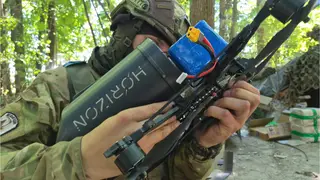
The U.S. Army's 2nd Cavalry Regiment, stationed in Germany, has successfully conducted a combat drone strike using equipment assembled entirely by its own soldiers without external contractor support. The unit built and deployed an Orqa MRM2-10 drone fitted with 3D-printed bomb casings that can be configured with various explosive types, ranging up to 12 miles in range. The achievement demonstrates military adaptation of commercial drone technology and additive manufacturing techniques for rapid field deployment.
The 2nd Cavalry Regiment's achievement represents a broader shift in military drone adoption following lessons from the 2022 Ukraine conflict. Ukrainian forces demonstrated that affordable, commercially available unmanned aircraft could effectively supplement traditional military capabilities, prompting U.S. military branches to develop comparable in-house expertise. The Army has since established formal training programs combining 3D printing and drone operations, while other services independently pursue similar fabrication and deployment strategies.
The "Dragoon bombs" represent an adaptation of additive manufacturing for munitions, allowing field personnel to customize payloads for different tactical scenarios—from anti-personnel to anti-armor applications. This approach reduces logistical dependency and enables rapid modification of equipment based on immediate operational needs, a capability demonstrated by Ukrainian forces that caught U.S. military planners' attention.
This development could reshape military logistics and supply chain dependencies by enabling distributed manufacturing of weapons systems. It may affect defense procurement structures, potentially reducing reliance on traditional contractors while increasing skill requirements for front-line personnel. The approach could influence how other nations structure military capabilities, particularly smaller militaries seeking cost-effective alternatives. However, widespread adoption might also complicate weapons tracking, command oversight, and compliance with international protocols governing munitions standards and accountability.