Advanced AI Model Solves Historic Napoleonic Cipher That Stumped Researchers for Two Centuries
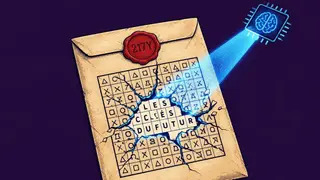
An AI engineer at cybersecurity firm SentinelOne used OpenAI's GPT-6 Astra model to decrypt a 217-year-old coded letter addressed to one of Napoleon's generals in approximately six hours using only a single image and prompt. The cipher, which had remained unsolved on historical databases despite containing only 1,300 characters from 155 distinct symbols, was cracked by the AI working through transcription and cryptanalysis simultaneously rather than as separate tasks. The decoded message revealed a March 1809 military briefing from Napoleon's stepson regarding troop movements as Austria prepared for war with France.
The cipher presented an unusual challenge due to its complexity and the loss of historical decryption keys. The message consisted of approximately 1,300 individual cipher units composed from 155 unique symbols, with previous researchers managing to identify only 33 of these mappings over many decades. The document originated from Napoleon's stepson in Italy and was intended for delivery to a general stationed in Dalmatia, making it geographically significant to military coordination across the empire's dispersed territories during the 1809 conflict with Austria.
Church's verification methodology strengthened confidence in the AI's work by introducing deliberate constraints. The engineer removed references to Napoleon and Marmont from the model's training context, then repeated the decryption process to confirm the system produced identical results independently. This approach tested whether the AI had genuinely solved the cipher through cryptanalytic reasoning or simply pattern-matched against historical references.
This development may influence how organizations approach historical document recovery and authentication, as general-purpose AI models demonstrate unexpected capabilities in specialized domains like historical cryptanalysis. The speed and accuracy could reshape research workflows for archives and historical institutions, potentially reducing costs and timelines. However, the reliance on AI verification methods raises questions about validation standards when human expert consensus becomes unavailable, and whether such capabilities warrant new protocols for handling sensitive historical materials.