UK Startup Develops Nuclear Fusion-Powered Spacecraft to Halve Mars Travel Time
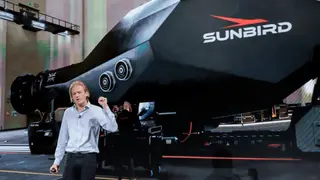
Pulsar Fusion is developing Sunbird, a nuclear fusion-powered spacecraft designed to travel at 329,000 mph, potentially reducing Mars mission duration from seven to eight months down to approximately four months. The spacecraft will use a Dual Direct Fusion Drive concept with helium-3 fuel and achieve a specific impulse of 10,000-15,000 seconds, with an orbital demonstration planned for 2027. Sunbird stations positioned in low-Earth orbit will dock with outgoing spacecraft to propel them toward deep-space destinations.
Pulsar Fusion's approach differs fundamentally from terrestrial fusion energy projects. Rather than attempting to harness fusion reactions within Earth's atmosphere using deuterium and tritium, the Sunbird spacecraft will exploit helium-3 fusion in the vacuum of space, where plasma naturally behaves more favorably. The company demonstrated initial plasma confinement capabilities in March 2024 at the MARS Conference, using krypton as a test propellant with combined electric and magnetic field systems.
The development roadmap includes significant technical refinements before achieving sustained fusion reactions. Future upgrades will incorporate rotating magnetic field heating, radiofrequency heating systems, and advanced rare-earth superconducting magnets to generate stronger magnetic containment fields. These enhancements aim to enable higher plasma densities and pressures necessary for controlled fusion propulsion. Pulsar is not alone in pursuing this technology; Princeton University and Helicity Space are simultaneously developing competing fusion propulsion concepts.
If successful, fusion-powered spacecraft could substantially reshape deep-space exploration economics and timelines. Halving Mars transit times may reduce crew exposure to radiation and psychological stress while lowering mission costs through faster turnaround cycles. However, the technology remains in early demonstration phases with significant engineering challenges ahead. The potential societal impact—spanning commercial spaceflight, planetary science advancement, and resource allocation for space infrastructure—depends heavily on whether Pulsar and competitors can transition from proof-of-concept to reliable, operational systems.