Ukraine Shares Demining Expertise with Syria, Urges Tailored Approaches
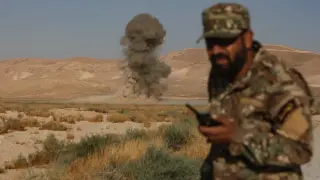
Ukraine's Deputy Minister of Economy and Environment visited Syria to discuss mine-clearing operations and signed an intergovernmental agreement on mine action cooperation. Drawing from Ukraine's own experience with Russian mines, the official argued that international demining efforts should build local capacity and adapt to Syrian conditions rather than simply applying standardized foreign models. The initiative seeks to address the extensive damage left by years of conflict in Syria.
Ukraine's Deputy Minister Ihor Bezkaravainyi traveled to Syria in late September 2026 to advance collaborative mine-clearing efforts between the two nations. The visit included field assessments in multiple Syrian cities including Damascus, Idlib, and Aleppo, where delegations observed ongoing clearance operations and evaluated Ukrainian technological solutions for adaptation to Syrian conditions. An intergovernmental mine action agreement was formalized during the trip, establishing the framework for knowledge-sharing and capacity building.
The initiative stems from Ukraine's extensive firsthand experience managing mine contamination from its own conflict. Bezkaravainyi emphasizes that effective demining requires understanding local infrastructure damage patterns, resource constraints, and reconstruction timelines rather than applying uniform international protocols. His argument suggests that sustainable mine action depends on developing Syrian institutional capabilities and incorporating technologies suited to the country's specific post-conflict landscape.
This cooperation could significantly affect Syria's reconstruction timeline and civilian safety as demined areas become habitable. The agreement may influence how international organizations approach humanitarian demining globally, potentially shifting emphasis toward local expertise and adaptation rather than standardized foreign intervention models. However, the initiative's actual impact depends on resource availability, political stability, and whether tailored approaches can overcome the scale of contamination across Syria's devastated regions.