V&A Museum Showcases Ukrainian Sacred Art and Reinterprets Lavra Collection
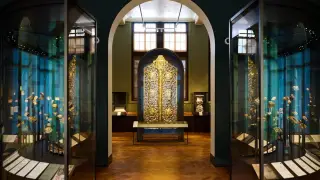
The Victoria and Albert Museum in London opened an exhibition titled "Sacred Treasures from Kyiv" displaying seven examples of Ukrainian Baroque sacred art from the 17th and 18th centuries, alongside previously held artifacts from Kyiv-Pechersk Lavra monastery. The collection features works by Kyiv goldsmiths including icons, liturgical vessels, and ornate religious objects with updated historical interpretation reflecting their Ukrainian origins. The exhibition runs until September 2027 and represents the first UK presentation of these particular Lavra pieces.
The exhibition brings together artifacts spanning two centuries of Ukrainian religious craftsmanship. The seven loaned pieces from Kyiv-Pechersk Lavra—a major Orthodox monastery—showcase the technical skill of local artisans through icons, liturgical vessels, and ornamental objects rendered in precious metals. Two pairs of ornate silver-gilt Holy Gates, previously held by the V&A, are now displayed alongside these works, revealing connections between artisans who likely collaborated on similar commissions during the Baroque period.
Historical reinterpretation has been central to the project. The Holy Gates had been documented under a Russian imperial framework during the Soviet era and subsequent decades abroad. Collaborative research between V&A specialists and Ukrainian scholars has reestablished their authentic provenance and cultural context, correcting the historical record to properly attribute these works to Ukrainian artistic traditions rather than broader imperial narratives.
The exhibition may serve multiple functions: it could enhance international recognition of Ukrainian cultural heritage at a prominent British institution, potentially influencing how museums globally frame similar collections. For Ukraine, repositioning artifacts under accurate historical interpretation—particularly during ongoing conflict—may strengthen cultural identity and ownership of its artistic legacy. The long-term loan arrangement and scholarly partnership could establish a model for other institutions reassessing collections through repatriation-adjacent frameworks that acknowledge origins without requiring physical return.