Saturday Night Live Spoofs GTA 6 and Zelda With Live-Action Video Game Character Showdown
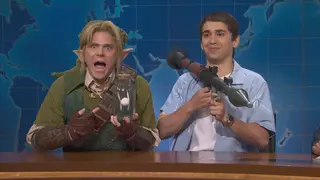
Saturday Night Live's Weekend Update segment featured live-action portrayals of GTA 6's Jason and The Legend of Zelda's Link debating which game is superior, complete with references to car theft, weapons, and puzzle-solving. Hosted by Verity star Dakota Johnson with Taylor Swift making a surprise appearance, the six-minute skit paired the video game characters with Weekend Update hosts Colin Jost and Michael Che. While Link's costume received praise for accuracy to the Ocarina of Time remake, gaming fans largely criticized the portrayal of GTA 6's Jason as shallow and costume-like.
Saturday Night Live's Season 52 episode featured a six-minute Weekend Update sketch comparing two highly anticipated November 2026 video game releases. The skit paired video game protagonists in a comedic debate format, with the characters discussing their respective gameplay mechanics and thematic elements. The episode, hosted by Dakota Johnson with a Taylor Swift cameo appearance, attempted to capitalize on mainstream interest in these major gaming titles by bringing them to life through live-action performances and comedy writing.
Gaming audiences responded with considerable skepticism to the execution. Fan reactions focused on the sketch's reliance on outdated gaming stereotypes and limited character specificity, particularly regarding the portrayal of the GTA 6 protagonist. While costume design received mixed reviews—with Link's outfit earning acknowledgment for accuracy to the source material—the jokes themselves drew criticism for recycling decade-old gaming culture references rather than engaging with what makes these particular games distinctive to contemporary players.
This sketch illustrates how mainstream entertainment outlets approach gaming culture as their audience expands beyond traditional gamers. The mixed reception may reflect a broader tension: as video games become increasingly mainstream entertainment, traditional comedy institutions may struggle to create humor that resonates simultaneously with both casual observers and engaged gaming communities. The critical response could influence how television approaches gaming content in the future, potentially signaling that surface-level references require deeper understanding to satisfy modern audiences familiar with these franchises.