UGREEN MagFlow Pro Power Bank Uses Innovative Liquid Cooling to Prevent Wireless Charging Slowdown
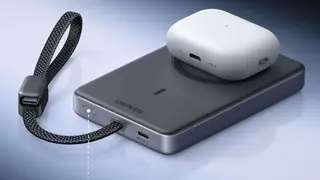
UGREEN's MagFlow Pro is a 10,000mAh power bank priced at $149.99 that incorporates a liquid cooling system to address heat generation from fast magnetic charging. The device supports up to 25W Qi2.2 wireless charging and 45W wired USB-C output, with independent testing from outlets like 9to5Toys and Macworld confirming the cooling system maintains noticeably lower temperatures than comparable alternatives. The built-in USB-C cable and charging display make it a practical accessory for newer iPhones capable of accepting 25W wireless charging speeds.
The MagFlow Pro addresses a real trade-off in modern device charging: as wireless power delivery speeds increase, heat generation rises proportionally, which can throttle charging performance. UGREEN's approach uses a visible coolant circulation system to manage temperatures at the components most affected by faster magnetic transfer. Testing from multiple outlets found measurable temperature reductions compared to competing products, suggesting the engineering delivers practical benefits beyond novelty appeal.
The 10,000mAh capacity proved reliable in independent drainage tests, outperforming typical performance benchmarks for its size class. Users gain flexibility through both wireless and wired charging options, with the built-in USB-C cable serving dual duty as a carrying strap, while an additional port supports multiple simultaneous devices—though total power output decreases when split between them.
This product may influence purchasing decisions among iPhone owners with newer models capable of 25W wireless charging, potentially expanding adoption of faster magnetic charging if thermal management proves consistently effective. The $149.99 price point positions it in the premium accessory segment, which could shape market expectations around heat-dissipation features in future power bank designs. However, cooling system longevity and real-world durability over extended use remain unaddressed, and benefits vary substantially based on individual device models, usage patterns, and environmental conditions.