Perseverance Discovers Evidence of Multiple Ancient Water Episodes in Jezero Crater
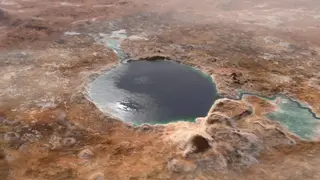
NASA's Perseverance rover encountered igneous rocks in Jezero Crater's Margin Unit that revealed a surprisingly intricate record of water interactions spanning at least three distinct geological episodes on ancient Mars. Rather than the expected sedimentary rocks, the igneous formations examined by the rover's SuperCam instrument showed chemical and physical alterations indicating encounters with standing lakes, subsurface groundwater, and heated hydrothermal fluids. These findings substantially complicate the understanding of Mars' hydrological history during its early period.
The Perseverance rover's examination of Jezero Crater's Margin Unit diverged sharply from initial predictions. Scientists had anticipated finding layered sedimentary deposits typical of ancient lakebeds, which are excellent at preserving biosignatures. Instead, the rover discovered crystalline igneous formations—rocks solidified from molten material—that paradoxically contained far more detailed information about water's presence on early Mars.
The SuperCam instrument proved instrumental in this discovery, using laser spectroscopy to analyze rock composition from distances up to 21 feet. After studying over 185 bedrock targets, researchers identified three distinct periods when water fundamentally altered these rocks' chemistry and structure through different mechanisms: standing lakes, subsurface groundwater, and thermal fluids. This multiplicity suggests Mars' hydrological systems were far more complex and dynamic during its early epochs than previously understood.
These findings could reshape scientific priorities for astrobiology research and future Mars missions. Understanding Mars' ancient water history informs searches for potential microbial life signatures and may clarify planetary habitability timelines. For space agencies and researchers planning upcoming expeditions, the discovery that water interacted with Martian rocks through multiple mechanisms could direct drilling depths and sample collection strategies, potentially affecting how efficiently future missions locate biosignatures or subsurface resources.