Brooklyn Menswear Retailer Launches Expansive Fort Greene Flagship Blending Shopping With Hospitality
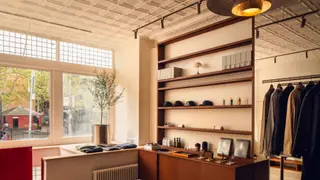
Million Goods, a Brooklyn-based men's specialty retailer, has opened a 2,100-square-foot flagship location in Fort Greene that combines retail with a listening room, wine bar, and outdoor garden. Founded by Drew Kaufmann and Matt Reyer, the store expands on the concept of their original 2024 Greenpoint location by offering curated under-the-radar menswear brands alongside hospitality experiences. The expansion reflects the founders' strategy to differentiate physical retail from e-commerce competitors by providing experiential, community-focused shopping.
Million Goods' Fort Greene location represents a deliberate scaling of a retail model that has proven successful in its initial form. The 2,100-square-foot space more than triples the footprint of the original Greenpoint store, allowing the founders to fully realize their vision of integrating multiple hospitality functions—including a dedicated listening room, wine service, and social gathering areas—alongside fashion retail. The architectural design intentionally uses spatial separation across two floors to create distinct experiences while maintaining an inviting flow between them.
The business emerged from founder Drew Kaufmann's observation that e-commerce giants were steadily capturing market share from independent retailers, prompting him to identify hospitality as a differentiation strategy that online platforms cannot replicate. His collaborator Matt Reyer brought complementary expertise from music industry connections and entrepreneurial experience, creating a team capable of executing across both retail and experiential domains. The secured investor backing from figures in music and retail indicates confidence in the model's viability.
This store model could influence how independent menswear retailers approach competition with e-commerce platforms, potentially accelerating adoption of experiential retail strategies among small merchants. The approach may affect commercial real estate preferences, as it requires larger, well-designed spaces to support hybrid retail-hospitality concepts. Consumers may see changes in physical shopping environments prioritizing social experience alongside product selection, though this model's success may remain limited to affluent urban markets where customers value lifestyle experiences alongside purchases.