Next-Generation Chip Applications Demand New Design and Testing Approaches for Harsh Conditions
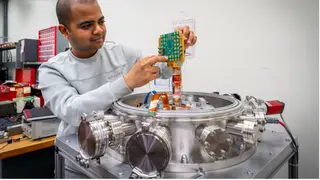
Semiconductors deployed in orbital data centers, defense systems, quantum computing, and particle physics applications face unprecedented challenges from simultaneous extreme stresses including radiation, thermal shock, vibration, and pressure. Traditional qualification methods are insufficient for these multifaceted environmental demands, requiring designers to employ advanced 4D modeling, AI-driven simulation, and physical validation. The convergence of multiple stressors demands innovative design exploration and testing tools to ensure system reliability.
The semiconductor industry is confronting a fundamental shift in how chips must be engineered and validated. Applications spanning space infrastructure, military platforms, particle accelerators, and quantum systems now operate simultaneously under multiple environmental stressors—radiation exposure, extreme temperature swings, mechanical vibration, and pressure variations. This convergence of simultaneous hazards renders traditional single-condition qualification protocols inadequate, forcing manufacturers to develop more sophisticated approaches.
Organizations including national laboratories and defense contractors are already mobilizing resources to address these challenges. Government-backed initiatives like the DARPA Rads to Watts program exemplify efforts to develop advanced power solutions for extreme-environment electronics. The commercial design-tool sector is responding by integrating artificial intelligence and machine learning capabilities to explore design alternatives more comprehensively, though these virtual predictions ultimately require physical testing against reproduced environmental conditions to validate reliability predictions.
Advances in extreme-environment semiconductor design could accelerate development of space-based infrastructure and remote sensing capabilities, potentially affecting telecommunications, climate monitoring, and national security applications. However, the specialized expertise and equipment required may concentrate this capability among larger manufacturers and well-funded government programs, possibly widening technological gaps. Supply chains for radiation-hardened components may experience increased demand, which could influence availability and costs for space and defense industries.