OpenAI Introduces Dots Agent to Compete with SpaceX's Grok Bot
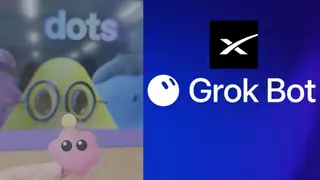
OpenAI has launched Dots, an autonomous AI agent designed to manage workflows across multiple applications and cloud services, positioning it as a competitor to SpaceX's recently released Grok Bot. The platform leverages OpenAI's new GPT-6 Astra model and enables users to automate tasks including content creation, software testing, research support, and business operations. Both platforms operate as always-on AI companions that connect across apps through cloud-based infrastructure, though they employ different underlying AI models and approaches.
OpenAI's Dots represents a significant escalation in the autonomous AI agent market, where multiple technology leaders are simultaneously developing competing platforms. The system distinguishes itself through broad application compatibility, connecting with over 4,000 services and tools while operating through a dedicated cloud infrastructure. Users can interact with Dots across multiple communication channels including Slack, Microsoft Teams, and ChatGPT itself, using either text-based chat or voice commands for task management and information retrieval.
The competitive landscape has intensified with SpaceX's entry into this space through Grok Bot, creating a two-front competition between OpenAI and Musk-affiliated companies. Both platforms employ similar architectural approaches—cloud-based computing and always-on availability—but rely on different underlying AI models: Dots uses OpenAI's newly developed GPT-6 Astra, while Grok Bot leverages SpaceX's proprietary Grok model. This technological divergence suggests different optimization strategies for agent performance and user experience.
The proliferation of autonomous AI agents could significantly reshape workplace productivity and business operations across sectors. Organizations may experience increased efficiency in routine tasks such as content generation, software quality assurance, and research support, potentially displacing certain administrative roles while creating demand for new skill sets in agent management and oversight. However, reliance on cloud-based AI systems raises considerations around data privacy, security vulnerabilities, and vendor dependency that employers and users may need to carefully evaluate before widespread adoption.