Educational Game Simulates Climate Adaptation Challenges for Indigenous Communities
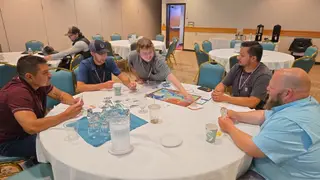
Researchers at the College of Menominee Nation have developed a board game called Reztoration that simulates how tribal communities respond to climate-related disasters such as floods, fires, and droughts. Players make strategic decisions about resource allocation, such as investing in emergency preparedness or renewable energy infrastructure, while balancing economic, environmental, and cultural outcomes for the community. A free version of the game is expected to be released in 2027.
The College of Menominee Nation's Sustainable Development Institute created Reztoration as an educational tool grounded in the experiences of tribal communities facing environmental threats. The game mechanics require participants to navigate competing priorities—safeguarding populations through disaster readiness, transitioning to clean energy systems, and preserving cultural values—while managing limited resources. By incorporating both individual and collective scoring systems, the design emphasizes that community welfare depends on coordinated decision-making rather than individual gain alone.
The game presents specific climate scenarios including flooding, wildfires, and prolonged droughts, with player choices determining institutional resilience. Strategic options like emergency preparedness infrastructure and renewable energy investments directly influence outcomes, creating tangible connections between abstract policy decisions and community survival. The beta-testing phase will refine gameplay before the planned free release, potentially expanding access to this educational resource.
Reztoration could serve multiple audiences by making climate adaptation accessible through interactive learning rather than technical documentation. Indigenous communities, educators, and policymakers might use the game to explore resource allocation trade-offs and build understanding of climate vulnerability in tribal contexts. The free distribution model may increase reach to under-resourced communities, though the game's actual educational impact would depend on adoption rates and how effectively gameplay translates to real-world climate planning discussions.