Nigerian Military Eliminates Senior Islamic State Commander in Southern Regional Operation
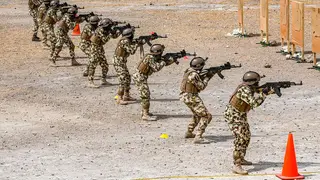
Nigerian Army, intelligence, and regional security forces killed Abdussamad Ohida, a top Islamic State West Africa Province (ISWAP) commander, during a raid in Ondo State's Owo forest over the weekend, marking a significant operation far from the group's traditional Lake Chad stronghold. According to security sources, Ohida had been leading the militant organization's activities in central and southern regions of Nigeria following his predecessor's 2023 arrest. The operation targeted what sources alleged was a plot to launch attacks on civilians timed for the Christmas period to disrupt the 2027 general elections.
Nigeria's security challenge with Islamic State West Africa Province has traditionally centered on the Lake Chad region in the country's northeast. This weekend's operation marks a significant shift, demonstrating the militant group's expansion into southwestern territories far from its established stronghold. The killing of Ohida, who assumed regional leadership after his predecessor's capture in 2023, represents a disruption to the organization's command structure and operational planning across central and southern Nigeria.
The coordinated raid involved three security entities—the Nigerian Army, the Department of State Services, and Amotekun, the regional security network established by southwestern governors in 2020. According to security assessments, Ohida had been orchestrating attacks timed to coincide with the Christmas period, with alleged connections to previous incidents including the 2022 prison break in Abuja.
The elimination of a senior militant commander may temporarily degrade the group's operational capacity in Nigeria's southern regions, potentially reducing immediate security risks to civilians in those areas. However, such tactical victories could be offset by organizational resilience or successor appointments. The broader strategic impact depends on whether this operation reflects sustained pressure on ISWAP's expanded territorial presence or represents an isolated success, with implications for election security and civilian safety in the lead-up to 2027.