Kentucky QB Minchey Leads Dramatic Comeback Victory with Strong Second-Half Performance
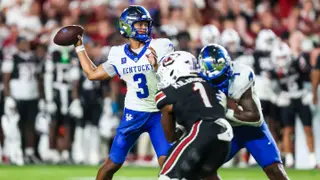
Kenny Minchey delivered an impressive second-half display as Kentucky rallied from a 20-10 halftime deficit to defeat South Carolina 35-34 in overtime, capped by a game-winning two-point conversion. The first-year starter threw for 222 yards after the break and drew praise from coach Will Stein for his composure and leadership in the high-pressure environment. Through five games, Minchey has established himself as one of the conference's most efficient quarterbacks with 1,148 yards, 11 touchdowns and just one interception.
Kenny Minchey's remarkable turnaround performance against South Carolina highlights the dramatic nature of college football competition. The Kentucky quarterback entered halftime having completed just 50 passing yards while his team trailed by 10 points, yet managed to orchestrate a complete offensive transformation in the second half. His ability to distribute 222 passing yards after intermission and execute the decisive two-point conversion in overtime demonstrates significant poise under extreme pressure.
Through five games this season, Minchey has compiled impressive statistical efficiency with over 1,100 passing yards, 11 touchdowns, and minimal turnovers. Head coach Will Stein's confidence in the first-year starter appears reinforced by this performance, suggesting the program has found stability at a traditionally challenging position. The upcoming matchup against ranked LSU will test whether Minchey can sustain this elevated performance level against elite competition.
This comeback victory may influence recruiting narratives around Kentucky's football program and quarterback development capabilities. The game's outcome could affect playoff consideration discussions for both teams and impact conference standings, potentially influencing bowl eligibility calculations. Additionally, Minchey's successful performance under adversity may boost fan engagement and attendance for upcoming home games, which could have modest economic implications for the university and local Columbia-area businesses affected by game-day activity.