World ID Launches Zoom Verification Tool as AI Video Deepfakes Become Indistinguishable to Humans
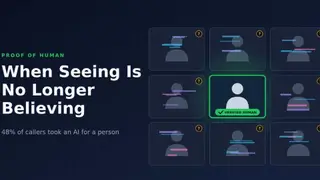
World, a proof-of-human verification network, is expanding its World ID service to Zoom after an AI video company demonstrated that its latest model could deceive video call participants nearly half the time. The timing reflects genuine business risk, following a 2024 incident where deepfake executives convinced a Hong Kong finance worker to transfer $25 million. World's response positions human verification rather than deepfake detection as the solution to increasingly convincing synthetic video calls.
The vulnerability World ID targets stems from rapid advances in synthetic media generation. Tavus's Griffin-Lite model represents a dramatic leap in capability, achieving near-human indistinguishability in real-time video interactions by processing video in rapid segments and matching audio with minimal delay. The 2024 Arup incident demonstrates that such attacks have already caused substantial financial damage, making the problem concrete rather than theoretical.
World's solution relies on cryptographic comparison of multiple biometric captures rather than attempting to distinguish authentic from synthetic video. The system has grown its verification network substantially, though 18 million users worldwide remains a limited fraction of the global population. Early enterprise adoption suggests demand exists among organizations handling high-stakes transactions.
This development could shift cybersecurity strategy across financial services, healthcare, and executive communications. Organizations may face pressure to implement identity verification systems before deepfakes become indistinguishable, potentially affecting how millions conduct remote business. However, widespread adoption of such systems raises questions about privacy, accessibility for those without Orb access, and whether verification infrastructure can scale to meet demand while remaining trustworthy.