Galactic Cosmic Rays Trigger Cancer Risk Beyond Direct Cell Damage in Space Travelers
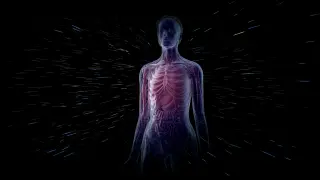
A new study from Oklahoma State University and the University of Texas Health Science Center examines how high-energy galactic cosmic rays, particularly iron nuclei, pose a significant cancer threat to astronauts despite hitting only about 3% of cells on a Mars mission. Beyond direct cellular damage, the research reveals a radiation-induced bystander effect where unhit cells are also damaged through biological cascades triggered by neighboring irradiated cells. The findings may help develop better protection strategies for deep space exploration beyond traditional shielding approaches.
High-energy particles stripped of electrons by supernova shockwaves constantly bombard space beyond Earth's atmosphere. While our planet's atmospheric shield protects surface inhabitants, astronauts on long-duration missions face substantial exposure to these cosmic projectiles. Iron nuclei represent particularly hazardous variants, creating dense tracks of cellular damage as they penetrate tissue.
The research demonstrates that radiation damage extends far beyond direct impact sites. When cells absorb ionizing hits, they trigger inflammatory signaling chains that persist for days, releasing chemical messengers that diffuse through surrounding tissue and compromise neighboring, previously unharmed cells. This cascading effect significantly amplifies overall biological damage compared to simple calculations based on direct hit rates alone.
These findings could reshape how space agencies approach astronaut safety during extended missions to Mars and beyond. Understanding the bystander effect may enable development of pharmaceutical interventions or biological countermeasures rather than relying solely on physical shielding, which adds substantial weight and cost to spacecraft. Medical professionals and mission planners may need to reconsider acceptable radiation exposure thresholds and implement protective strategies targeting the inflammatory cascade mechanisms identified in this research.