NASA Research Tackles Dangerous Ice Formation in Aircraft
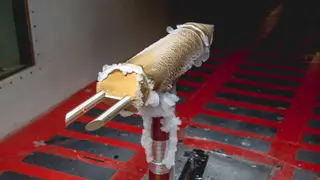
NASA researchers are conducting extensive tests to better understand supercooled large droplet icing, a hazardous phenomenon where aircraft encounter unusually large water droplets that remain liquid below freezing but rapidly freeze upon contact with aircraft surfaces. The study uses NASA's Icing Research Tunnel at Glenn Research Center to generate data that helps the aviation industry design more effective ice protection systems for commercial aircraft. These larger droplets, which can exceed typical cloud droplet sizes by twenty times, pose unique challenges because they can reach areas not covered by conventional ice protection mechanisms.
NASA's Icing Research Tunnel at Glenn Research Center serves as a critical testing ground for understanding how aircraft respond to extreme atmospheric conditions. The facility can generate controlled cloud environments where researchers observe and measure ice accumulation patterns on aircraft components, providing empirical data that informs engineering design standards across the aviation industry.
The challenge lies in the physics of these unusually large water droplets. Because they exceed standard cloud conditions by orders of magnitude, they behave differently upon impact—splashing and spreading to areas that conventional heating systems leave unprotected. By developing advanced measurement probes that capture the complete size spectrum of droplets in experimental clouds, NASA enables more accurate computer modeling and ultimately safer aircraft designs.
This research could enhance aviation safety for millions of commercial passengers by improving ice protection systems on aircraft. Airlines and manufacturers may benefit from more reliable engineering tools for designing de-icing equipment that addresses rare but serious weather conditions. The findings could reduce incidents in remote regions or polar routes where supercooled large drop encounters may be more frequent, potentially lowering maintenance costs and improving operational reliability across the commercial aviation sector.