North Carolina communities build lasting disaster resilience hubs after Hurricane Helene
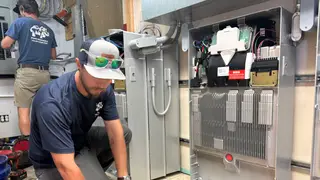
Western North Carolina communities are formalizing temporary disaster relief networks into permanent "resilience hubs" at local libraries, tool centers, and public spaces equipped with solar panels and essential supplies. These hubs emerged organically after Hurricane Helene knocked out power and services for extended periods, prompting residents to develop new skills and mutual aid systems. The city of Asheville has committed $2 million to strengthen these facilities, with potential for $10 million in long-term investment.
Western North Carolina's approach to disaster preparedness is evolving from crisis-driven responses into structured community infrastructure. Following Hurricane Helene's impact on regional power and service systems, residents developed informal mutual aid networks that proved essential during extended outages. These grassroots efforts demonstrated both the value of community spaces and the importance of practical skills—from tool use to supply distribution—that residents could leverage collectively.
The formalization of these networks represents a shift toward proactive resilience planning. Solar microgrid installations, like the one at Beacon of Hope in Marshall, exemplify how communities are embedding energy independence into public facilities. By equipping libraries, tool centers, and other trusted community spaces with renewable power and backup capacity, regions aim to maintain critical services and gathering points during future disruptions, reducing dependence on centralized infrastructure during emergencies.
This initiative could reshape how communities nationwide prepare for climate-related disasters and extended service interruptions. By investing in distributed energy systems and community-based infrastructure, municipalities may reduce recovery timelines and improve outcomes for vulnerable populations during emergencies. The model could influence urban planning and emergency management practices, though success may depend on sustained funding, community participation, and equitable access to these facilities across different neighborhoods and demographics.