Czech Dissident's Play Examines Moral Compromise in Intimate Theater Revival
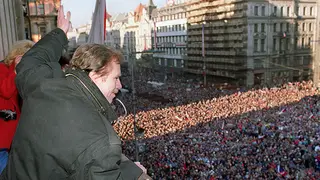
A new production of Vaclav Havel's 1975 work explores themes of complicity and complacency through the story of a playwright-turned-brewery worker invited to tour a couple's newly renovated home. The play carries particular resonance given Havel's own experience as a persecuted dissident whose works were banned and performed in secret during Communist rule in Czechoslovakia. The contemporary revival, directed by Edward Einhorn at an intimate venue, demonstrates the enduring relevance of Havel's examination of how ordinary people rationalize compromise and materialism.
Vaclav Havel's career embodied the intersection of artistic expression and political resistance. During the Communist era in Czechoslovakia, his theatrical works were officially suppressed, yet persisted through clandestine performances in private homes—a defiant circulation that prefigured his later role as a nonviolent leader of the Velvet Revolution. The character Ferdinand Vanek, appearing across multiple Havel plays, became an emblematic figure for dissidents throughout Central Europe, representing the intellectual confronting systemic pressure to abandon principle.
The Torn Page venue itself carries symbolic weight: housed in the former residence of celebrated actors Rip Torn and Geraldine Page, it restores "Unveiling" to the intimate domestic setting where such plays were originally performed underground. Director Edward Einhorn has spent three decades championing Havel's theatrical legacy through his company, most recently via the 2011 English publication of "The Vanek Plays."
Contemporary revivals of politically charged twentieth-century drama may help audiences examine historical patterns of moral compromise and state pressure in unfamiliar cultural contexts. Such productions could deepen public understanding of how authoritarian systems operate through everyday social mechanisms rather than overt force. For theater practitioners and cultural institutions, Havel's work may continue modeling how artistic spaces can sustain dissent and dialogue during periods of ideological constraint, potentially informing contemporary discussions about creative freedom.