Wing expands Walmart drone delivery to Denver and Seattle with safer tethered lowering system
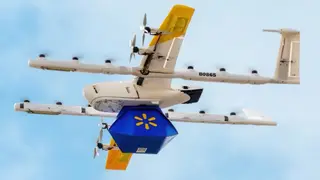
Wing and Walmart announced expansion of autonomous delivery to Denver and Seattle in 2027, covering over 270 Walmart locations nationwide. The Wing Hummingbird drone differs significantly from Amazon's approach by hovering 23 feet above ground and lowering packages via tether rather than landing directly in customers' yards, reducing risk of damage or accidents. The hybrid aircraft carries up to five pounds of payload at speeds up to 60 mph, promising grocery delivery in approximately 30 minutes.
Wing's delivery approach fundamentally differs from competitors through its design philosophy. Rather than landing aircraft directly in customer yards like Amazon's heavier MK30 drone, the Hummingbird maintains altitude and uses a tether system to lower packages safely to ground level. This strategy prioritizes accident prevention by keeping the aircraft's weight airborne while only exposing lightweight cardboard boxes to potential hazards. The system's efficiency relies on ground operations—regulatory filings suggest most of the promised 30-minute delivery window involves warehouse and logistics handling rather than flight time itself.
The expansion to Denver and Seattle represents Wing's largest deployment yet, eventually covering over 270 Walmart locations. Current restrictions limit payload to five pounds, directing drones toward small, time-sensitive items like groceries and medications. The company's operational model may pressure traditional last-mile delivery services, particularly for quick suburban runs, though regulatory frameworks like FAA Part 108 remain incomplete.
Wing's expansion could reshape last-mile delivery economics by reducing labor and operational costs associated with driver recruitment, insurance, and vehicle maintenance. Suburban areas with dispersed customers may see the greatest disruption to traditional delivery jobs, potentially affecting gig workers and small logistics operations. However, the five-pound payload limit constrains the technology's scope, meaning human delivery networks would likely remain essential for larger orders. Community concerns about safety, noise, and airspace congestion may also influence adoption rates across different neighborhoods.