Los Angeles Philharmonic commissions dynamic light installation that visualizes orchestral performance
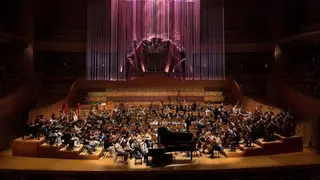
Grimanesa Amorós created Radiance, a 60-by-35-foot LED light sculpture for the Los Angeles Philharmonic's performance of Scriabin's Prometheus at Walt Disney Concert Hall. The installation coordinates color sequences with orchestral movements through six synchronized moments, transforming the hall's atmosphere without overshadowing the musicians. The sculpture uses reflective material and programmable LED tubing to explore themes of fire and transformation drawn from both Greek mythology and Incan cosmology.
Grimanesa Amorós designed the installation using reflective materials and programmable LED tubing to create a 60-by-35-foot suspended sculpture. The color sequences were meticulously timed to align with six key moments throughout Scriabin's composition, with the artist also integrating the concert hall's ambient lighting system into the overall visual scheme. This coordination ensured the entire venue participated in the experience rather than merely framing a single overhead object.
The work draws conceptual inspiration from mythological narratives about transformation and creation—specifically the Greek Prometheus and the Incan deity Viracocha—yet translates these themes through abstract color and light rather than literal visual storytelling. By treating fire as a symbolic concept that shifts through chromatic intensity and spatial movement, Amorós created a visual language that accompanies the orchestral performance without prescribing specific emotional interpretations to listeners.
The installation suggests a broader model for enhancing live classical music experiences through integrated design technology. Museums, concert halls, and performing arts venues may explore similar approaches to make traditional performances feel more immersive for diverse audiences. However, such projects require significant resources and coordination, potentially limiting accessibility to well-funded institutions. The success of temporary installations like Radiance could influence how cultural organizations balance artistic innovation with practical constraints on implementation.