Weekend Rally Fizzles as Bitcoin Retreats from Key Price Level
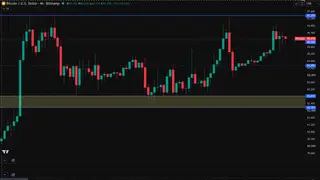
Bitcoin rose approximately 1% from Sunday morning to Monday morning, climbing from $85,300 toward a peak near $86,980 before retreating to $86,100 as it encountered the same resistance level that rejected prices on Friday. Weekend liquidations of $62.7 million were predominantly short positions, though institutional traders noted that sustained movement requires a break and hold above $87,200 to confirm further upside momentum. Institutional spot Bitcoin ETF inflows for October 2 were revised upward to $189.9 million after BlackRock's iShares Bitcoin Trust disclosed $158.2 million in single-day purchases, while major corporate holders Strategy and Strive both announced new Bitcoin acquisitions.
Bitcoin encountered technical resistance near $87,000 during the weekend advance, failing to sustain gains above the $86,100 level that had previously blocked upward movement on Friday. Traders identified $87,200 as the critical threshold required to signal renewed bullish momentum and invalidate the pattern of repeated rejections at similar price points. Weekend derivatives activity showed concentrated short-position closures, accounting for roughly two-thirds of the $62.7 million in liquidations recorded across exchanges.
Major institutional participants continued adding to Bitcoin holdings despite price volatility. BlackRock's iShares product alone captured $158.2 million in single-day inflows on October 2, while corporate entities MicroStrategy and Strive Global each executed separate acquisition strategies—one emphasizing stock buybacks alongside Bitcoin purchases, the other deploying preferred equity to fund a larger weekly Bitcoin addition.
Bitcoin's price action and institutional purchasing patterns could influence broader market confidence in cryptocurrency as an asset class. Large corporate and fund-level acquisitions may signal confidence among sophisticated investors, potentially affecting retail participation and volatility. Conversely, repeated failure to sustain advances above key resistance levels could trigger uncertainty about near-term directional momentum, which may matter for individuals and institutions evaluating exposure to digital assets or cryptocurrency-linked investments.