Project Salt Box Expands Monitoring of Federal Immigration Detention Infrastructure
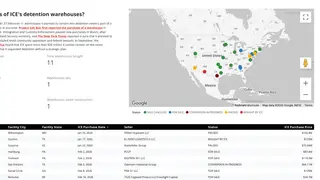
Project Salt Box has enhanced its tracking system to monitor the federal government's growing immigration detention network across three categories: government-purchased warehouses, acquisitions of existing private detention facilities, and newly constructed secure units on federal property. The tracker documents how the Department of Homeland Security has shifted its approach after spending over $1 billion on warehouses that faced legal challenges and community opposition, instead pivoting toward purchasing private prison facilities and building new infrastructure. The expanded tool aims to provide transparency on how billions in federal dollars are being allocated across immigration detention expansion nationwide.
The federal government's detention expansion strategy has undergone significant restructuring following financial and legal setbacks. Initial investments in warehouse conversions proved costly and controversial, resulting in substantial losses and community-led opposition that forced the cancellation of numerous projects. Rather than continuing this approach, DHS has shifted toward acquiring existing facilities from private prison operators and developing purpose-built infrastructure on government-owned land, representing a more decentralized expansion model.
This tracking initiative may affect public awareness of immigration detention spending and infrastructure development in affected communities. Local officials and residents could use the information to advocate for policy changes or mount opposition to planned facilities. The transparency tool may also inform legislative oversight and journalistic scrutiny of how federal detention budgets are allocated, potentially influencing future appropriations decisions and shaping public discourse around immigration enforcement priorities.