Researchers Demonstrate Experimental Evidence for Altermagnets, a Newly Theorized Magnetic State
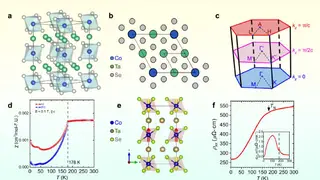
Scientists have provided experimental confirmation of altermagnets, a theoretical category of magnetic materials that combines properties of both ferromagnets and antiferromagnets without generating stray magnetic fields. Using spectroscopy techniques, researchers detected characteristic electronic signatures in cobalt-intercalated tantalum diselenide that match predictions for this novel magnetic state, where electrons behave magnetically despite zero net magnetization. This discovery has significant implications for spintronics, as altermagnetic materials could enable densely packed electronic devices that avoid electromagnetic interference.
Altermagnets represent a theoretical category that scientists have only recently begun to formalize. The key distinction lies in their unique electronic properties: while they maintain zero overall magnetization like antiferromagnetic materials, their electrons still exhibit spin-dependent behavior, similar to ferromagnetic systems. This unusual combination arises from the way electron energy varies based on both spin orientation and momentum direction.
The cobalt-intercalated tantalum diselenide sample studied here belongs to a structural class known as van der Waals crystals, characterized by layered arrangements. This architectural feature distinguishes it from previously identified altermagnet candidates such as manganese telluride and chromium antimonide, potentially offering researchers greater flexibility when integrating the material into composite devices with other advanced substances.
The validation of altermagnets could reshape spintronic device engineering by enabling higher component density without electromagnetic crosstalk issues that plague current systems. Industries developing next-generation computing, data storage, and telecommunications infrastructure may eventually benefit from more compact, efficient electronics. However, the path from laboratory confirmation to commercial application typically requires years of refinement. The layered nature of this particular material may accelerate exploratory research, potentially informing future technological development, though practical device implementation remains speculative.