Kelvin Waves Threaten California Coastal Flooding While Vaccine Policy Changes Raise Disease Risk Concerns
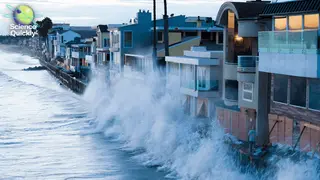
Researchers warn that an El Niño-driven Kelvin wave—a large-scale oceanic phenomenon spanning thousands of miles—could pose significant coastal flooding threats to California communities in the coming months. The article also discusses emerging concerns about measles outbreak risks in Florida following proposed changes to vaccine requirements and addresses scientific debunking of viral social media health remedies. Kelvin waves differ from typical beach waves by operating at planetary scales, traveling slowly over months while causing dramatic sea-level surges.
Kelvin waves represent a class of large-scale oceanic disturbances fundamentally different from the surface waves familiar to beach-goers. Operating at planetary dimensions spanning thousands of miles, these phenomena develop gradually over months rather than seconds, redistributing ocean water in ways that produce gradual but sustained alterations to coastal sea levels. The current atmospheric conditions associated with El Niño—a periodic warming pattern in tropical Pacific waters—have generated conditions conducive to Kelvin wave formation, directing this oceanic pulse toward California's coastline.
The hazard posed by this approaching wave stems not from dramatic visual effects but from the cumulative water displacement it represents. Distributed across vast distances, the elevation increase may appear modest at any single location, yet when combined with existing tidal cycles and storm activity, such conditions could create compound coastal flooding scenarios affecting populated communities and infrastructure along the California coast over the coming months.
Coastal communities in California could face increased flooding risks if this Kelvin wave materializes as predicted, potentially affecting residential areas, commercial districts, and critical infrastructure near sea level. The gradual nature of the threat may complicate public awareness and preparedness efforts, as the danger lacks the immediate visibility of acute weather events. Communities may need to reassess coastal management strategies and emergency response protocols. Additionally, the connection between this phenomenon and El Niño patterns highlights how large-scale climate patterns can translate into localized hazards requiring regional adaptation planning.