NASA Mission to Explore Potential Underground Lunar Cavern Could Unlock Volcanic History
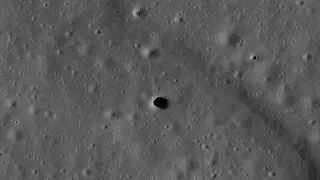
NASA selected the GIMLI project to investigate whether the Marius Hill Pit connects to a vast underground cave or lava tube using radar, seismic sensors, gravity measurements, and cameras. Such subsurface voids could preserve geological records of the Moon's volcanic past and potentially offer future astronauts natural radiation protection. The instruments will be delivered to the lunar surface through NASA's Commercial Lunar Payloads Services program.
The Marius Hill Pit, located in one of the Moon's most geologically active regions, represents a promising target for subsurface exploration. Scientists have long theorized that ancient volcanic processes created extensive networks of caves and tunnels beneath the lunar surface, but orbital observations alone cannot confirm their existence or scale. GIMLI will be the first mission to directly examine such a feature from ground level, employing multiple complementary sensing technologies to penetrate the lunar subsurface.
The instruments aboard GIMLI—ground-penetrating radar, seismic equipment, gravity sensors, and imaging cameras—will work in concert to map any hidden voids. This multi-method approach revives seismic exploration techniques not used on the Moon since the Apollo era, combining them with modern detection technology. If a lava tube is confirmed, researchers could determine its dimensions and structural properties, providing crucial data for understanding the Moon's geological history.
This mission could advance lunar science significantly while informing practical considerations for human spaceflight. Discovery and characterization of subsurface caves may influence future mission planning, as such naturally shielded environments could reduce radiation exposure and temperature extremes for astronauts—potentially lowering costs and risks of extended lunar habitation. The project may also enhance understanding of planetary geology more broadly, offering insights into how volcanic activity shapes celestial bodies. Additionally, the mission demonstrates how commercial lunar delivery services enable diverse scientific research beyond government agencies alone.