Expert Argues Space-Based Missile Defense Architecture Needs On-Orbit Servicing Capabilities
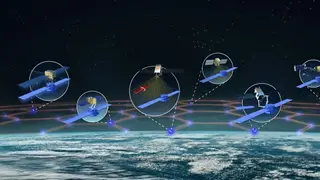
A former Missile Defense Agency director discusses how the U.S. missile defense challenge has evolved to include hypersonic weapons, maneuvering warheads, and fractional orbital bombardment systems beyond traditional ballistic missile threats. The emerging threat environment and technological advances require new architectural approaches, with on-orbit logistics and servicing capabilities potentially playing a crucial role in maintaining resilient space-based defenses. The interview examines how Golden Dome, the space-based component of future U.S. air defense, must adapt to these evolving challenges.
The threat landscape has shifted significantly from the Cold War era's doctrine of mutual assured destruction to what adversaries now call "escalate to deescalate"—a strategy involving limited strikes designed to deter U.S. intervention in regional conflicts. Beyond traditional ballistic missiles, adversaries have developed hypersonic weapons, maneuvering warheads that can alter their flight paths, and fractional orbital bombardment systems capable of deploying warheads from space with minimal warning.
Technological advances have made space-based defenses newly feasible. Improvements in sensor technology, artificial intelligence processing, mesh communication networks, and particularly the dramatic reduction in launch costs have revived consideration of orbital defense components. The Golden Dome architecture must integrate these space-based systems with terrestrial sensors and interceptors while managing complex command and control challenges that extend beyond previous generations' integration efforts.
The push for space-based missile defense infrastructure could influence defense spending priorities and industrial policy decisions affecting aerospace contractors and government budgets. If implemented, such systems might affect international relations and arms control negotiations, as other nations respond to perceived shifts in strategic capability. The emphasis on on-orbit servicing capabilities may also stimulate commercial space industry development, potentially benefiting companies operating in satellite maintenance and logistics sectors.